
-
August 25, 2026
Student project proposals funded by USU Office of Research
Two QuantCog Lab proposals received Undergraduate Research & Creative Opportunities (URCO) grants for the 2026-2027 academic year! Jared Vance will be leading a 2-experiment EEG project called “Characterizing heterogeneity in the long-term neurocognitive impacts of concussion,” and Talmage Walters will be leading a cross-disciplinary Psychology + Linguistics study (in collaboration with Dr. Gaby Klassen, USU) called, “Cross-linguistic variability in the numerical interpretation of quantifiers.” Congrats, Jared and Talmage!

__________
August 5, 2026
Proceedings paper on secondary minimization goals
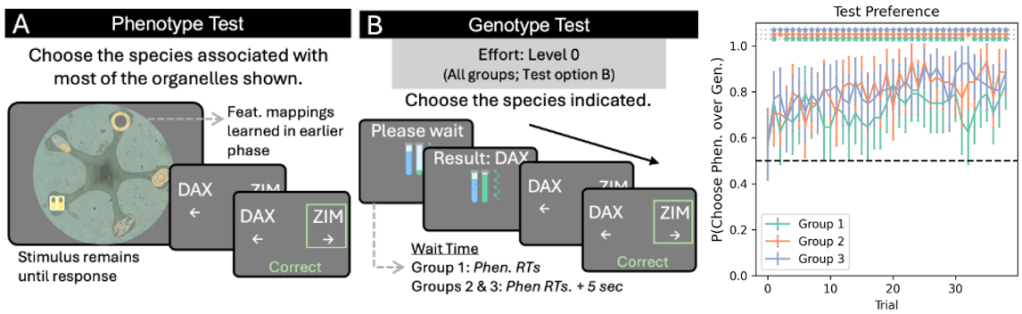
Our CogSci paper titled “Strategy selection under equal accuracy: Dissociating time, effort, and engagement” is now available online! We found that when students had to choose between time-saving and effort-saving strategies for completing an organism classification task, they overwhelmingly prioritized saving time. Special thanks to USU undergraduate, Taylor Mathis, and social-cognitive postdoc at the University of Tübingen, Dr. Zachary Niese, for their contributions to this work!
__________
July 25, 2026
Spring/Summer Conference Tour
The QuantCog lab had the honor of presenting our various projects on attention and memory at three fantastic conferences this season: RMPA (Boise, Idaho), CEMS (Philadelphia, PA), and CogSci (Rio de Janeiro, Brazil). Looking forward to next year!
__________
June 2, 2026
Student work published in Curiosity
Two final research papers written by students in my Cognitive Psychology: Research, Scholarship, and Creative Inquiry course have been published in Curiosity! This is a very proud moment, as the dream of this course was for students to have the opportunity to design experiments, collect real data, and learn the entire research process from start to finish. “Depth of processing re-examined: Semantic superiority persists despite increased lexical task demands” led by Porter Roth can be read here, and “The impact of phonological and visual processing on memory retention” led by Emily Kuehnl can be read here!
__________
May 28, 2026
Modeling paper in press at Psychology & Aging
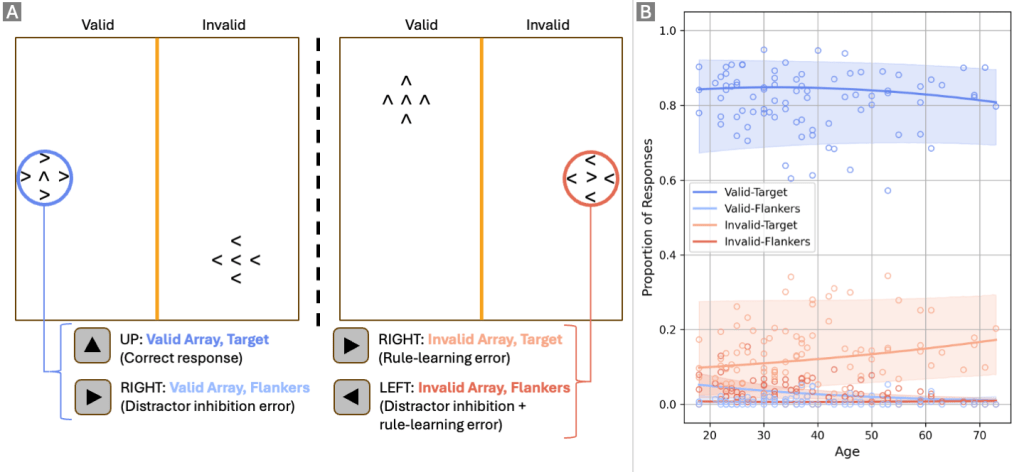
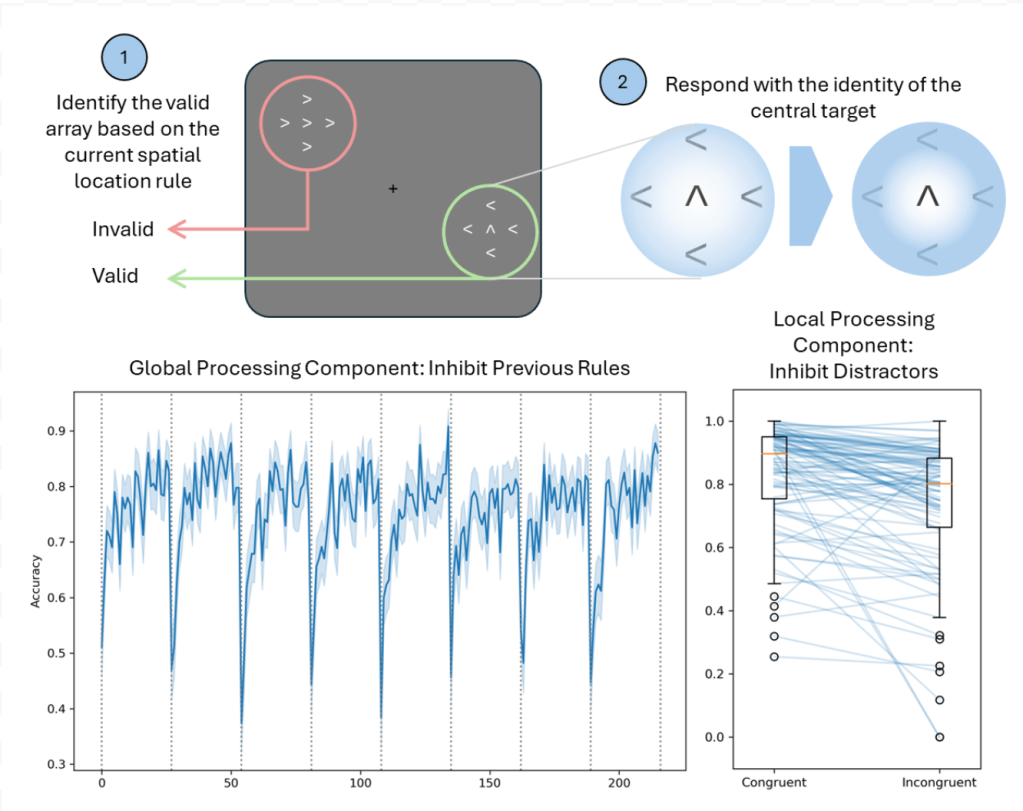
Our work presenting a new dual inhibition task and model is now in press! Our paper is titled Parsing inhibitory and mnemonic contributions to age-related decline in cognitive flexibility, and is available at https://psycnet.apa.org/doi/10.1037/pag0000996. What I like most about this task design is that it challenges both rule-learning and inhibition abilities on every trial, and we are able to decode which one failed to produce an error based on keypresses. We found that while perceptual inhibition remains intact across aging, declining cognitive flexibility is rooted in reduced precision for spatial locations encoded into memory. Special thanks to collaborators Dr. Per Sederberg of the University of Virginia, and JS extraordinaire and USU undergraduate Cole Francis!
__________
April 7, 2026
2026 Spring Student Research Symposium
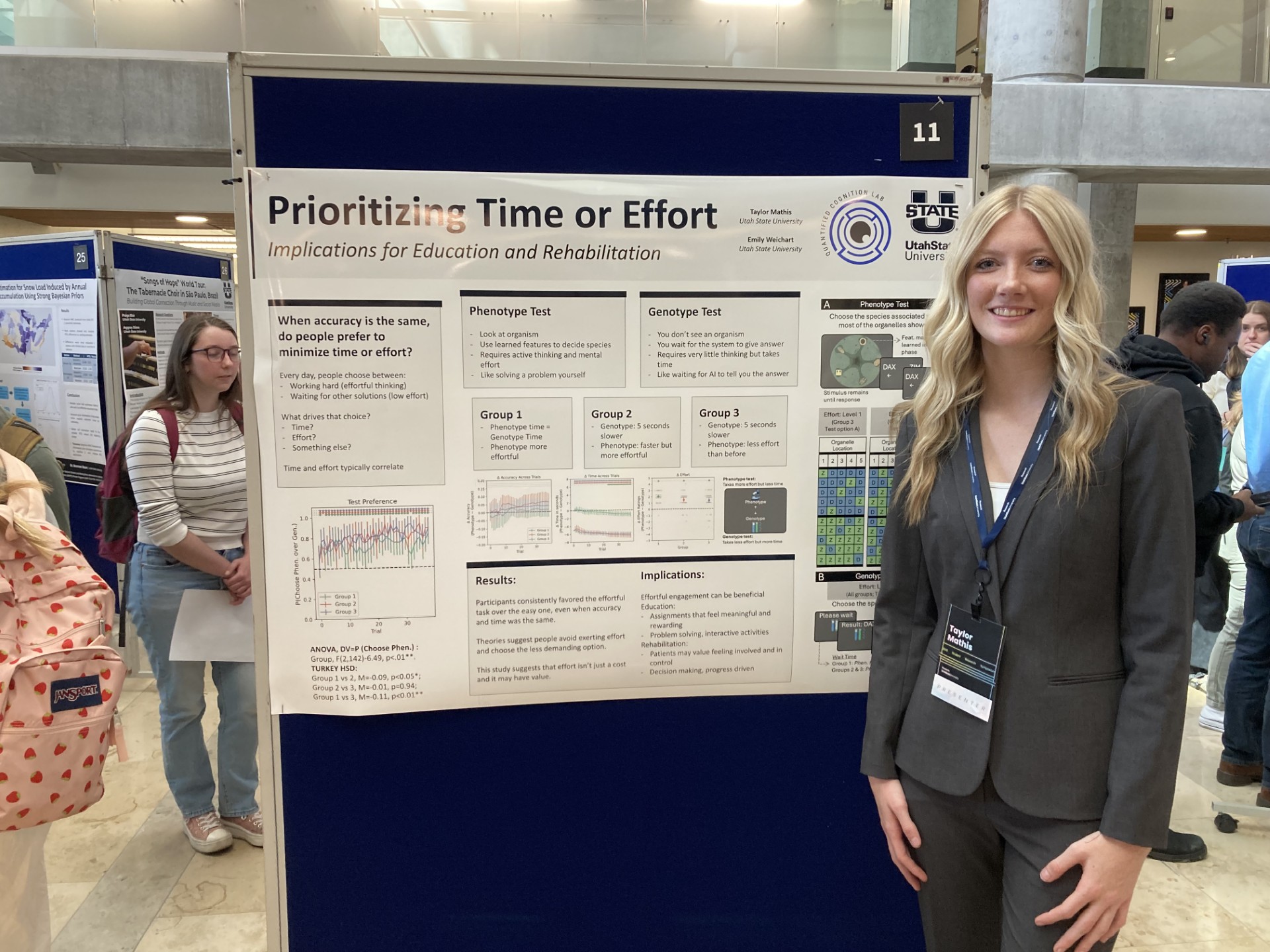
Undergraduate research assistant Taylor Mathis gave a fantastic poster presentation at this year’s student research forum! The project, entitled Prioritizing time or effort: Implications for rehabilitation and education is the culmination of Taylor’s 3 semesters of work in the QuantCog Lab examining how students make decisions to either save time or minimize effort when applying newly-learned material. We found that students overwhelmingly prefer to save time, even if it means using a strategy that involves significantly more effort!
__________
February 26, 2026
Eye-tracking paper in press at Cognition
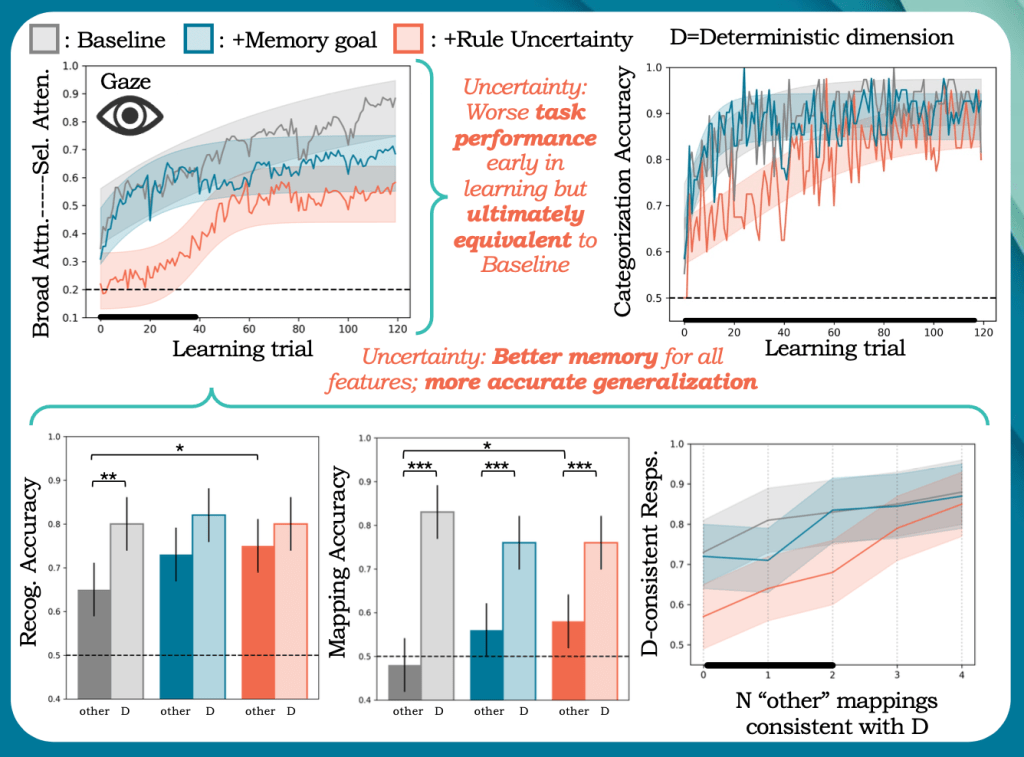
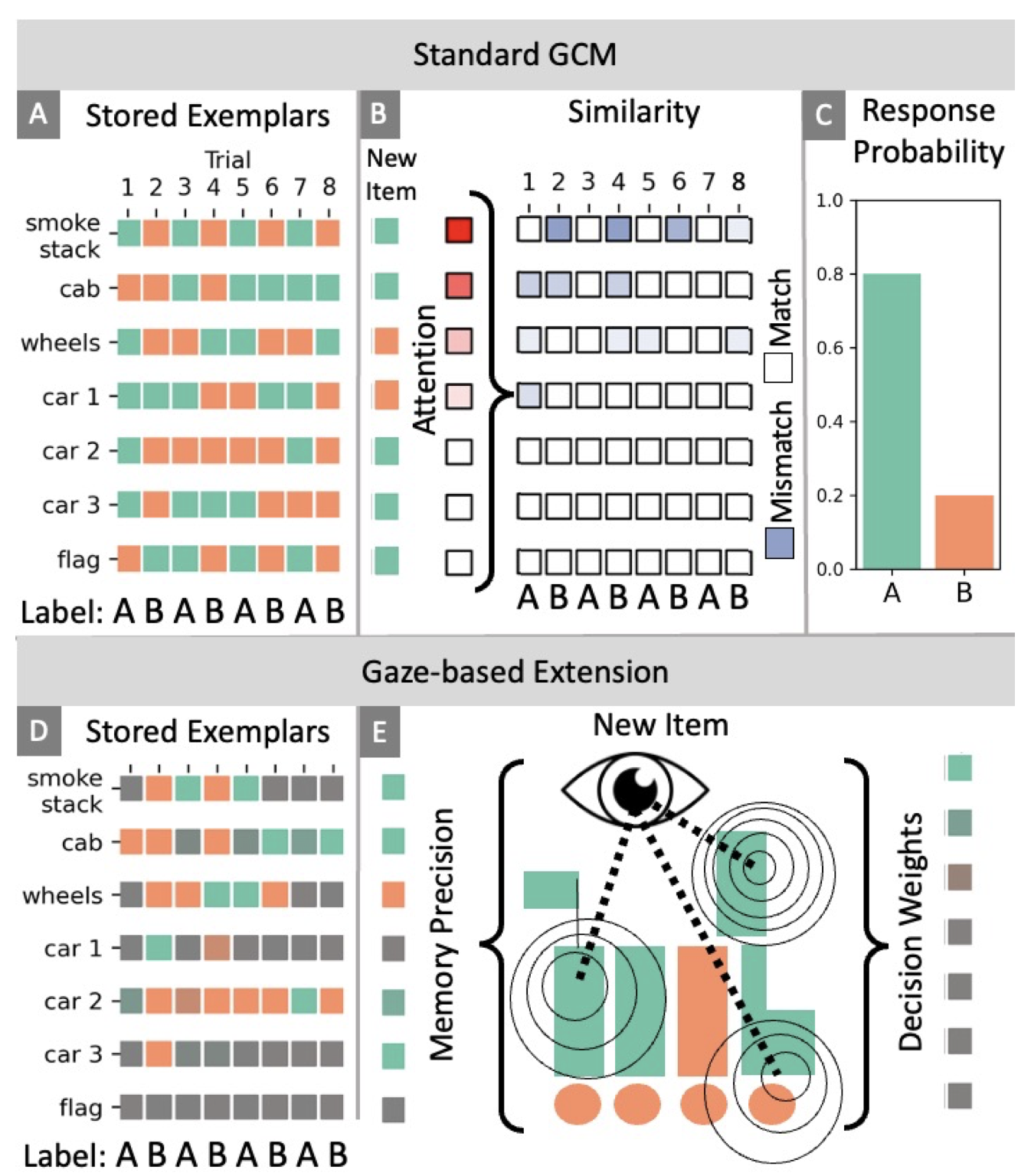
I am pleased to announce that a new paper entitled Overcoming the costs of selective attention: Resolving rule uncertainty supports acquisition of generalizable memory traces is now in press at Cognition! In this paper, Kevin Darby (Lifespan Development Lab PI, Florida Atlantic University) and I used eye-tracking to explore the impacts of selective vs. distributed attention during early learning on subsequent breadth of memory and category generalization. Although all participants selectively attended to one dimension by the end of the learning phase, participants who distributed attention broadly during early trials retained more comprehensive memory traces than those who used a selective attention policy from the outset. This finding suggests that the decision weights that guide categorization decisions may not perfectly represent the contents of the stored representation, and attention gates the information that enters the representation prior to strategic decision weighting. Check out the paper here!
__________
December 4, 2025
2025 Fall Student Research Symposium
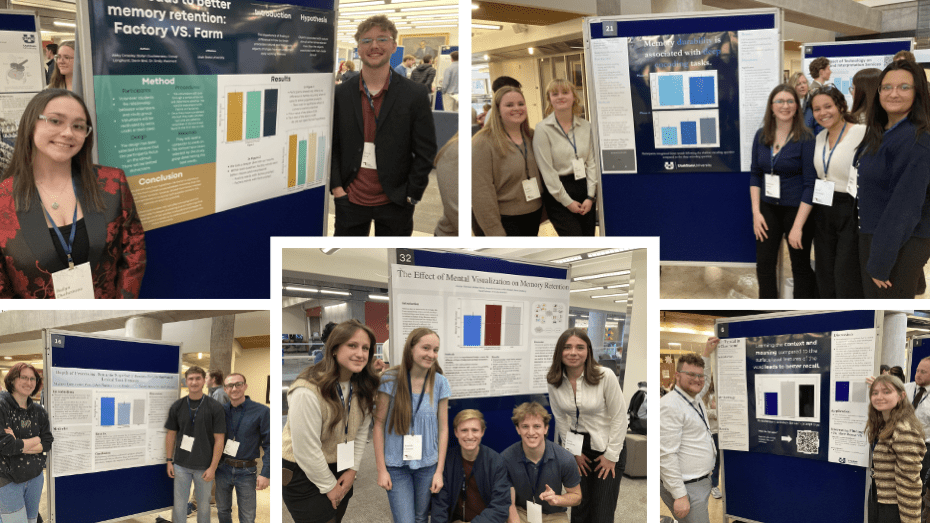
Super proud of the students in the first iteration of the Cognitive Psychology Research, Scholarship, and Creative Inquiry course! In the span of a single semester, the students gained hands-on experience with the complete research process from designing novel memory experiments, to collecting data from real participants, to statistically analyzing and interpreting their own results, to writing journal-style research papers in which they connected their findings to cognitive theory. Five teams of amazing students presented their research today at the Fall Student Research Symposium, and absolutely crushed the competition with their cognitive psychology expertise!
__________
November 22, 2025
Work presented at Psychonomics & MathPsych
Honored for the opportunity to present the QuantCog Lab’s research at Psychonomics in Denver, CO! Our work on cognitive flexibility and aging was presented at a fantastic satellite symposium on Computational Perspectives on Information Integration held by the Society for Mathematical Psychology, and our work on the memory limitations of selective attention was presented at the main Psychonomics conference.

__________
September 30, 2025
Project funded by Army Research Institute
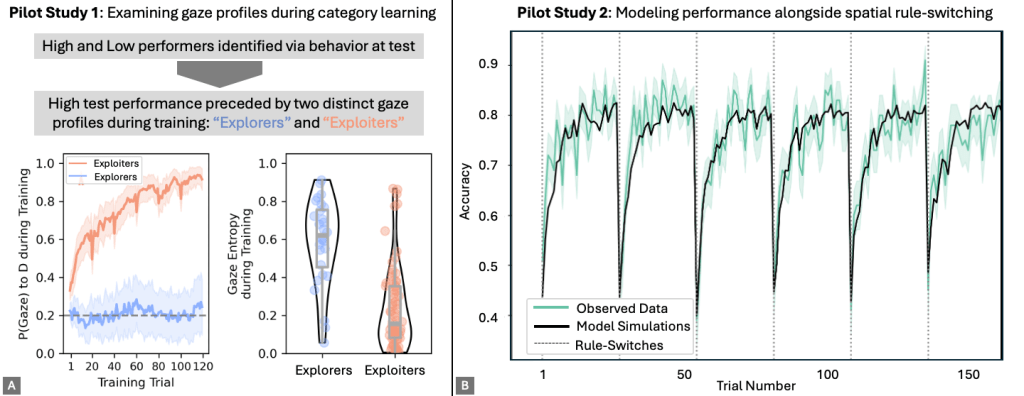
The QuantCog Lab has been granted $125,000 from the Army Research Institute to fund an exciting project, Computationally Decoding Gaze-based Information Sampling to Support Adaptation in Dynamic Learning Environments!
__________
July 31, 2025
Modeling work presented at CogSci
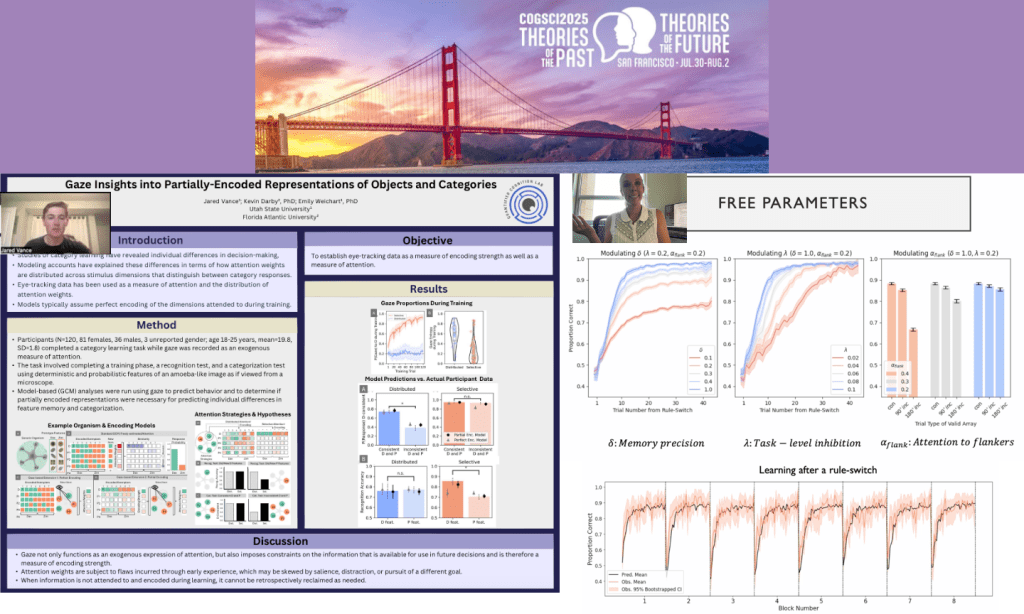
The QuantCog Lab presented two projects at this year’s CogSci in San Francisco! Special thanks and congratulations to superstar USU undergraduate students Jared Vance, Ethan Bardsley, and Cole Francis for their work on these projects, especially Jared for giving a standout poster presentation–speaking at an international conference is a major achievement! Our papers can be found in the conference’s annual proceedings issue: [partial encoding] and [aging and inhibition]; presentation recordings can be found on the underline platform.
__________
April 20, 2025
Consensus modeling paper in press at AMPPS
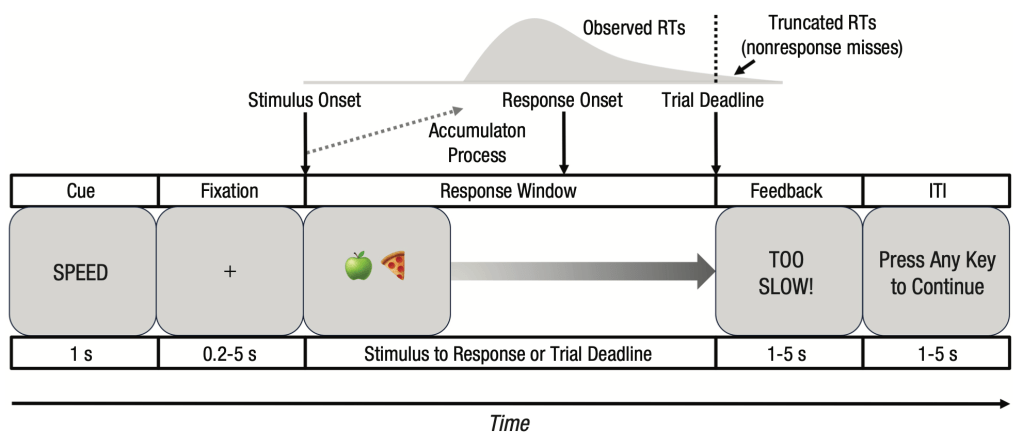
I am honored to be part of the illustrious team of scientists from all over the world who put together a practical resource for designing experiments for evidence accumulation modeling. The paper, “An expert guide to planning experimental tasks for evidence-accumulation modeling,” is now in press at Advances in Methods and Practices in Psychological Science, and can be found here. Special thanks and congratulations to project leaders Drs. Russell Boag, Reilly Innes, and Birte Forstmann from the University of Amsterdam and Dr. Scott Brown from the University of Newcastle!
__________
January 27, 2025
Proceedings paper on partial encoding
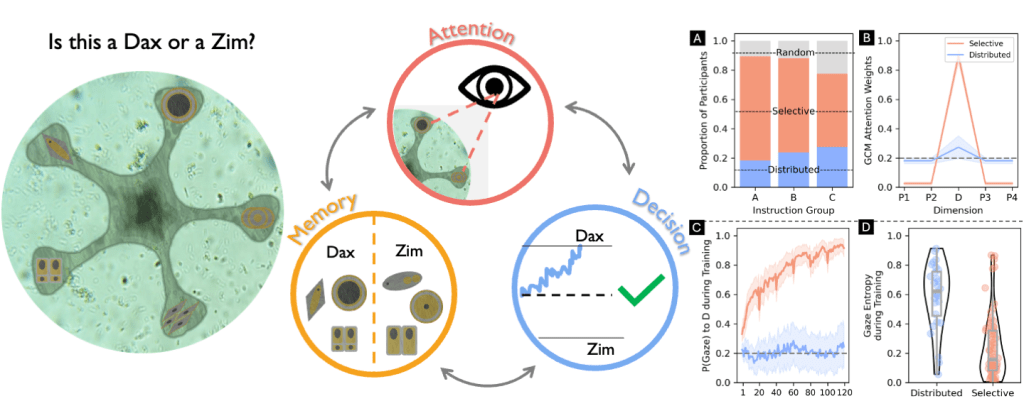
I am thrilled to share the news of a new paper titled “Gaze Insights into Partially-Encoded Representations of Objects and Categories“! This work leverages computational approaches to investigate eye-tracking patterns during learning as a way to measure memory encoding. Special thanks to USU undergraduate Jared Vance and Dr. Kevin Darby, PI of the Lifespan Cognition Lab at Florida Atlantic University, for their contributions to this work! Keep an EYE out for our paper in this year’s CogSci proceedings!
__________
December 5, 2024
2024 Fall Student Research Symposium
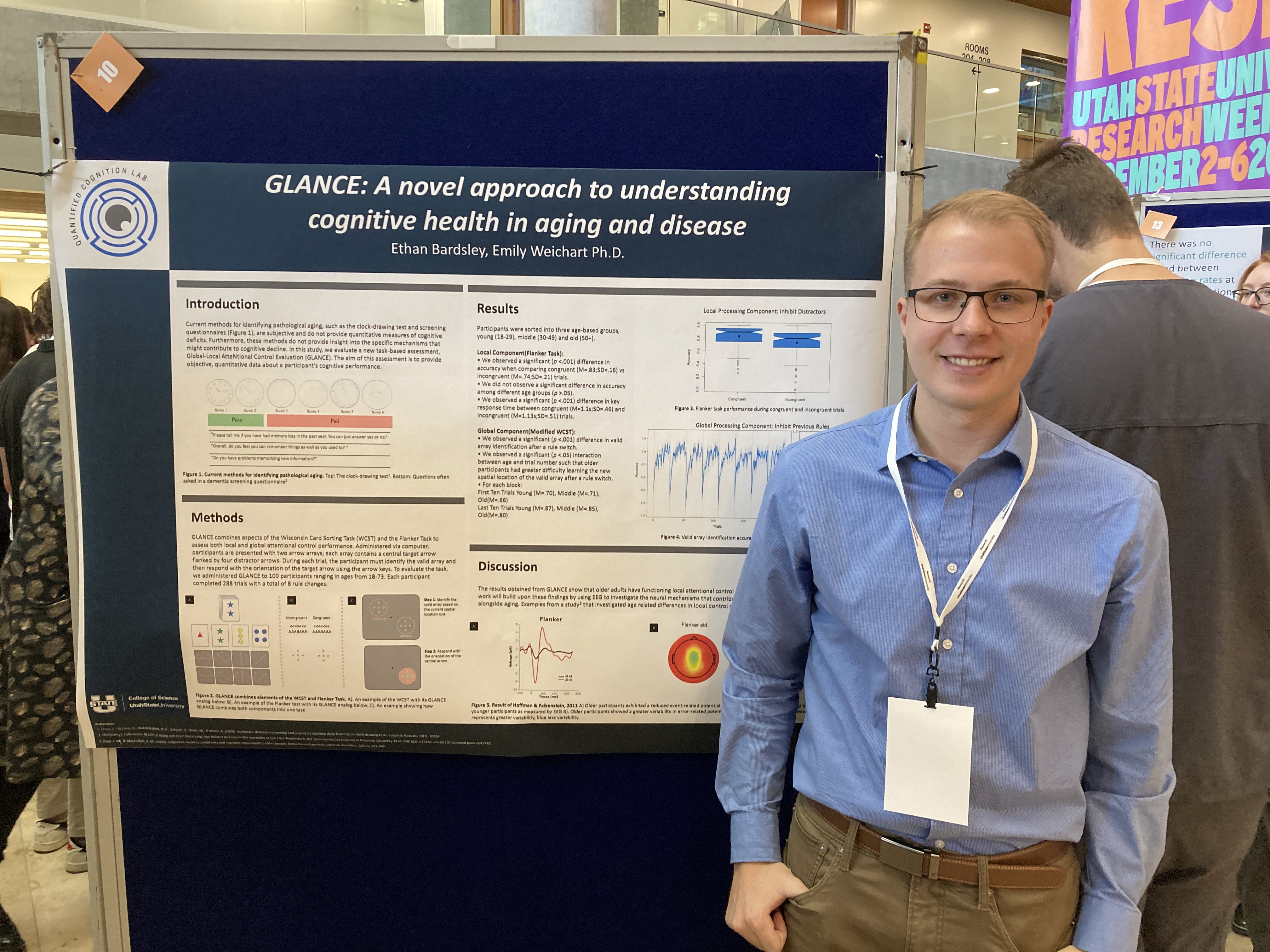
Undergraduate researcher Ethan Bardsley did an awesome job of representing the QuantCog Lab at USU’s Fall Student Research Symposium! His presentation, entitled “GLANCE: A novel approach to understanding cognitive health in aging and disease,” demonstrated the power of objective, task-based assessments for quantifying age-related changes in attentional control. Task-based measures of cognitive performance, such as those provided by the Global-Local Attentional Control Evaluation (GLANCE), could be the future of early detection of a range of neurological disorders.
__________
November 19, 2024
Department “Lab Spotlight” honors the QuantCog Lab
The QuantCog Lab was selected for the USU Psychology Department Newsletter’s “Lab Spotlight” segment in the November issue! Check out a great article on our upcoming projects here.
__________
November 14, 2024
New instructional EEG resource
The QuantCog Lab contributed a video on The Science of EEG to an innovative, accessible, online resource for students who are interested in behavioral neuroscience. Developed by Dr. Elizabeth Kirby (The Ohio State University) and freely available on OpenStax, Introduction to Behavioral Neuroscience is an interactive textbook and compilation of methods videos made by experts in biology, psychology, and neuroscience. The full resource is available here and the direct link to the QuantCog Lab’s video (located in Appendix A: Methods) is here!

__________
October 24, 2024
Proceeding paper on the mechanisms of attention decline in healthy aging
We present a new task and modeling framework to evaluate between- and within-trial attentional control! In this first presentation of the Global-Local AtteNtional Control Evaluation (GLANCE), we find that learning deficits in older adults are explained by impaired error-related memory suppression. See our CogSci paper here, featuring USU undergraduates Ethan Bardsley and Cole Francis, plus Dr. Per Sederberg, PI of the Computational Memory Lab at the University of Virginia!
__________
September 20, 2024
Research Catalyst grant proposal funded
The Quantified Cognition Lab has been awarded a Research Catalyst grant from the Utah State University Office of Research for an integrative project, entitled “The search for knowledge: Impacts of information search strategies on learning and neurophysiology“!

__________
May 31, 2024
Gaze modeling work presented at CEMS
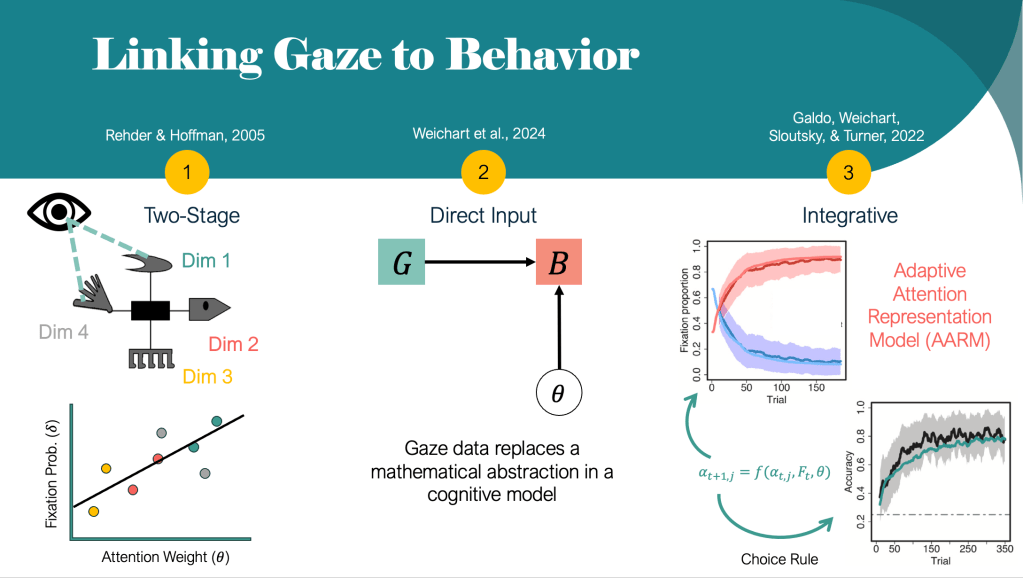
I am excited to present the lab’s recent work to explore partially-encoded stimulus representations and their impact on decision-making at the annual Context and Episodic Memory Symposium in Philadelphia, PA! My talk is titled: Gaze as a Direct Input to Encoding Structure in Models of Human Learning.
__________
May 19, 2024
Connecting research to the classroom
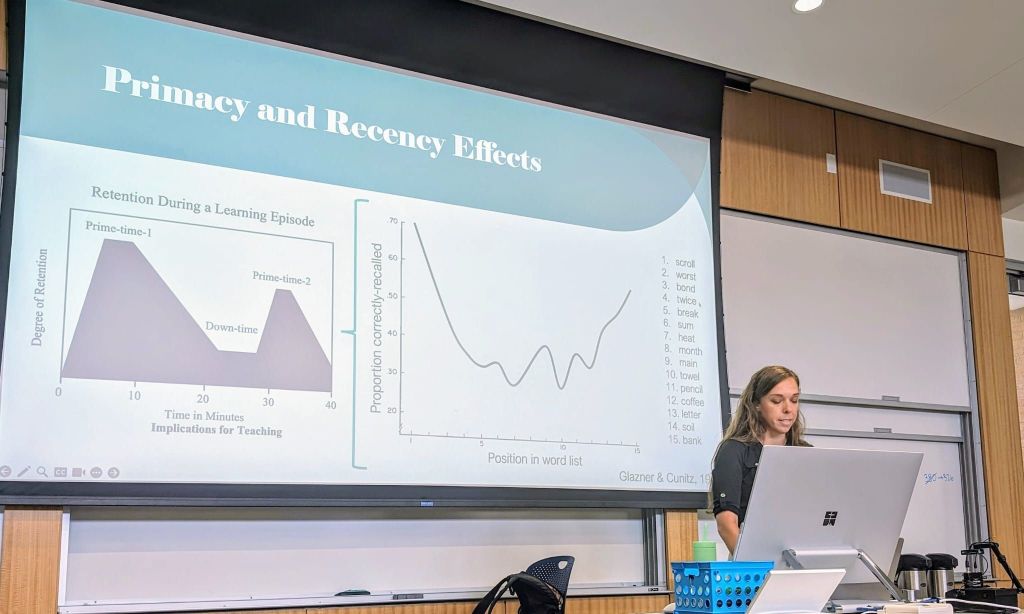
People think they know how learning works, but some of the most commonly held beliefs are, in fact, misconceptions. At USU’s 2024 eLearnX conference on interaction in distance learning, I am excited to deliver a Pedagogy Primer on The Cognitive Science of Learning, in which I will address what the latest research tells us about how we learn. I will cover topics like the physical brain structure and how it relates to theories of memory, retrieval practice, event segmentation, metacognition, and feedback-based learning.
__________January 20, 2024
Paper in press at Psychological Review
In a new paper titled “‘The eyes are the window to the representation’: Linking gaze to memory precision and decision weights in object discrimination tasks“, we present a novel direct input modeling approach for investigating gaze correlates of novel learning. Our findings reveal that selective attention during learning imposes constraints on the information that is available if the environment suddenly changes. Check out the paper here! Special thanks to the project’s senior authors from Ohio State University: Dr. Brandon Turner, PI of the Model-based Cognitive Neuroscience Lab, and Dr. Vladimir Sloutsky, PI of the Cognitive Development Lab!
__________
November 17, 2023
An interview with the PI
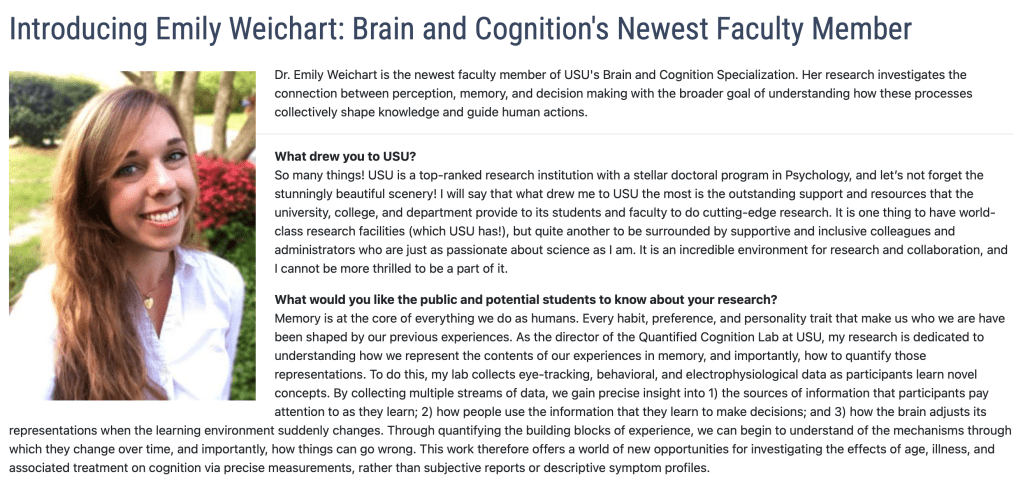
Happy to join the faculty USU Psychology’s Brain and Cognition Specialization! Check out this interview where I commented on my vision for the Quantified Cognition Lab!
Join the fun!
Stay updated with our latest research and other news by joining our listserv.

